

Sundays at FBC
Our church vision is to engage God and others whether gathered or scattered. Below find resources for Sunday sermons, daily Bible readings, small group discussion questions, and more.

Current Sermon Series
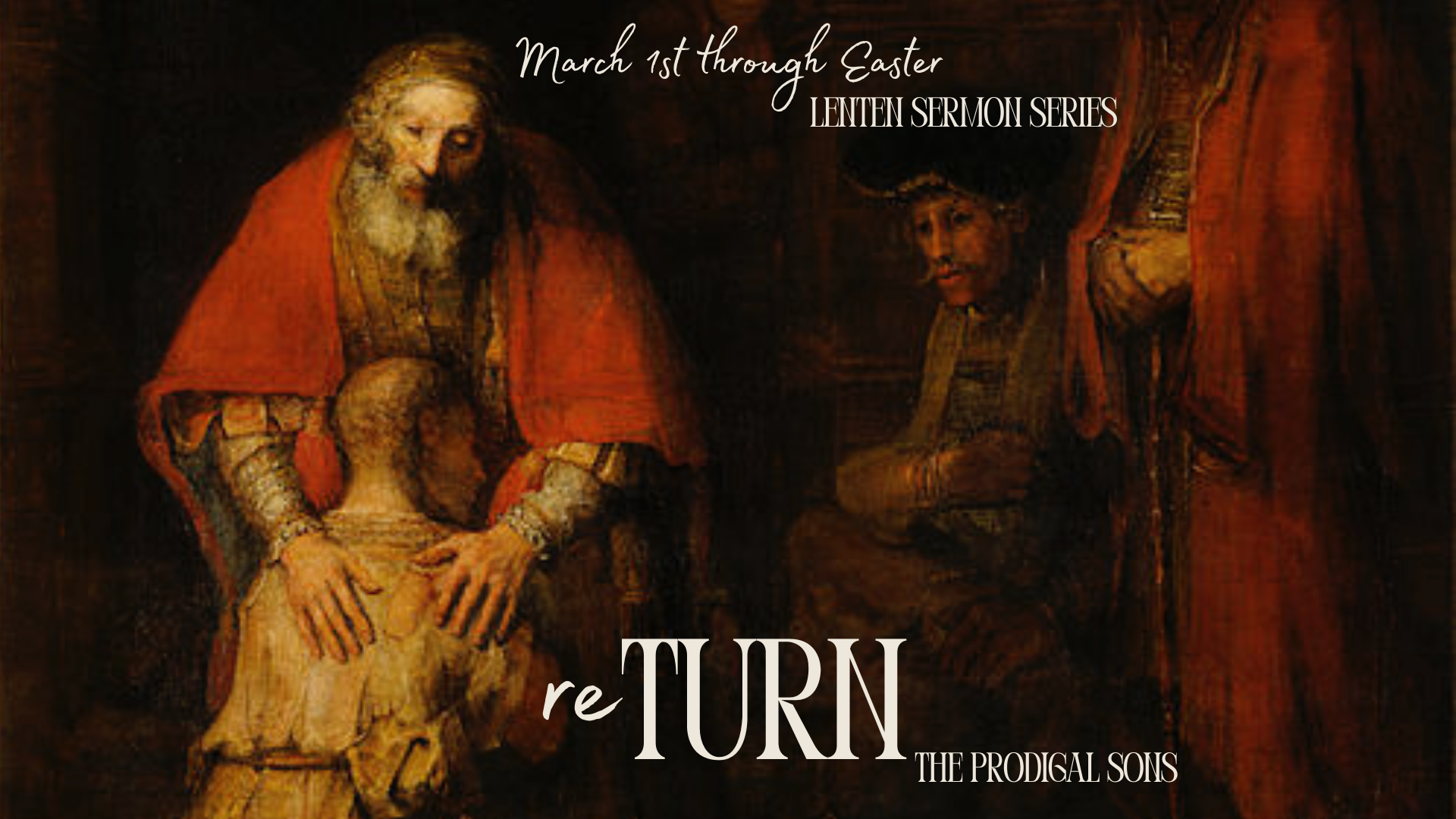
This Lent, we are invited to “reTURN” to encounter the heart of a loving Father in the face of rebellion in our own hearts through the lens of Luke 15:11-32, the story of the prodigal sons. Across six weeks, we will journey with the younger son as he leaves, wastes, and returns, discovering God’s abundant grace and compassion. We will also explore the perspective of the older son, revealing our own tendencies toward resentment and self-righteousness. Through reflection, repentance, and celebration, this series guides us to return to God, embracing forgiveness, restoration, and the joy of being found.
- March 1 - Lost
- March 8 - Leaving
- March 15 - Repentance
- March 22 - Heart of The Father, presented by Andrew Scibbe
- March 29 - The Older Brother, presented by Community Pastor Nick Walker
- April 5 - Home/Rejoice (Easter)
*all sermons presented by Lead Pastor Kris Tarkiewicz unless otherwise noted
Sermons
Check out the latest Sunday sermons!
Daily Bible Reading
Our goal is to make one daily decision to be in the Word of God each and every day. Below find the daily Bible readings for our current sermon series. You can also read the daily devotionals that go along with them.
“reTURN” Week One (March 1-7)
Main Text: Gospel of Luke 15:11–13
Sunday, March 1
Read: Luke 15:11–13
Reflection: Where in my life am I subtly choosing God’s gifts over God Himself?
Monday March 2
Read: Joel 2:12–13
Reflection: What would it look like for me to return to God with my whole heart, not just partial surrender?
Tuesday March 3
Read: Isaiah 53:6
Reflection: In what specific way have I “turned to my own way” recently?
Wednesday March 4
Read: Genesis 3:6–10
Reflection: When I choose independence from God, what emotions follow—freedom, shame, hiding?
Thursday March 5
Read: Psalm 51:1–12
Reflection: What comfort or habit is dulling my hunger for God?
Friday March 6
Read: Jeremiah 2:13
Reflection: What “broken cistern” am I drawing from instead of the living God?
Saturday March 7
Read: James 4:8–10
Reflection: What practical step can I take today to draw near instead of drifting far?
“reTURN” Week Two (March 8-14)
Main Text: Gospel of Luke 15:13–16
Sunday, March 8
Read: Luke 15:13–16
Reflection: What “far country” patterns are quietly forming distance between me and the Father?
Monday March 9
Read: Romans 1:21–25
Reflection: What false substitute have I been tempted to exchange for worship of God?
Tuesday March 10
Read: Proverbs 14:12
Reflection: What path once seemed right but led to spiritual emptiness?
Wednesday March 11
Read: Amos 8:11–12
Reflection: How would I recognize spiritual famine before it becomes crisis?
Thursday March 12
Read:Psalm 106:13–15
Reflection: Have I ever received what I insisted on, only to find it hollow?
Friday March 13
Read: 2 Peter 2:19
Reflection: What promises freedom but is quietly enslaving me?
Saturday March 14
Read: Hebrews 3:12–13
Reflection: Who can help me notice drift before it becomes departure?
“reTURN” Week Three (March 15-21)
Main Text: Gospel of Luke 15:17–19
Sunday, March 15
Read: Luke 15:17–19
Reflection: What would it mean for me to truly “come to my senses” right now?
Monday March 16
Read: 2 Corinthians 7:9–10
Reflection: Is my sorrow leading to shame—or to change?
Tuesday March 17
Read: Psalm 32:3–5
Reflection: What has unconfessed sin been costing me spiritually or emotionally?
Wednesday March 18
Read: Proverbs 28:13
Reflection: What am I still concealing that needs honest confession?
Thursday March 19
Read: 1 John 1:8–9
Reflection: Do I believe forgiveness is immediate and complete or do I still punish myself?
Friday March 20
Read: Luke 18:9–14
Reflection: Where has pride delayed repentance in my life?
Saturday March 21
Read: Micah 7:18–19
Reflection: Do I trust that God delights to show mercy to me?
“reTURN” Week Four (March 22-28)
Main Text: Gospel of Luke 15:20–24
Sunday, March 22
Read: Luke 15:20–24
Reflection: What emotions surface when I picture the Father running toward me?
Monday March 23
Read: Exodus 34:6–7
Reflection: Which description of God’s character do I most struggle to believe personally?
Tuesday March 24
Read: Psalm 103:8–13
Reflection: Do I live more like a servant earning love or a child receiving it?
Wednesday March 25
Read: Zephaniah 3:17
Reflection: What would change if I believed God rejoices over me?
Thursday March 26
Read: Romans 5:6–8
Reflection: How does Christ’s sacrifice redefine my worth?
Friday March 27
Read: Ephesians 2:4–7
Reflection: Where do I minimize the richness of God’s mercy in my story?
Saturday March 28
Read: Titus 3:4–7
Reflection: How can I extend to others the same mercy I have received?
“reTURN” Week Five (March 29-April 4)
Main Text: Gospel of Luke 15:25–30
Sunday, March 29
Read: Luke 15:25–30
Reflection: Where has comparison quietly stolen joy from my obedience?
Monday March 30
Read: Matthew 20:1–16
Reflection: Why does grace feel unfair when others receive what I worked for?
Tuesday March 31
Read: Philippians 2:3–8
Reflection: How would humility reshape my hidden resentments?
Wednesday April 1
Read: Jonah 4:1–11
Reflection: Do I struggle when God shows mercy to people I wouldn’t?
Thursday April 2
Read: Luke 18:9–14
Reflection: In what subtle ways do I measure myself against others?
Friday April 3
Read: 1 Corinthians 13:4–7
Reflection: Is my love patient and kind or easily irritated and envious?
Saturday April 4
Read: Hebrews 12:15
Reflection: Is there a root of bitterness I need to uproot before it spreads?
“reTURN” Week Six (April 5-11)
Main Text: Gospel of Luke 15:31–32; 24:1–12
Sunday, April 5
Read: Luke 15:31–32 & Luke 24:1–12
Reflection: What “dead” area of my life needs resurrection hope?
Monday April 6
Read: Colossians 3:1–4
Reflection: What does living as someone raised with Christ look like today?
Tuesday April 7
Read: John 20:11–18
Reflection: Where might I be looking for the living among the dead?
Wednesday April 8
Read: 2 Corinthians 5:17–21
Reflection: If I am truly new in Christ, what old identity must I stop rehearsing?
Thursday April 9
Read: Romans 6:4–11
Reflection: What would it mean to count myself alive to God in daily decisions?
Friday April 10
Read: 1 Peter 1:3–9
Reflection: How does living hope steady me in present trials?
Saturday, April 11
Read: Psalm 126
Reflection: How can my life become a testimony that “the Lord has done great things for us”?
Community Discussion Questions
We are to meditate on the Word of God not just alone but also with other followers of Jesus. We invite you to process what you’ve heard in the sermon and share what God is teaching you with others around you. If you are not currently part of a Community (small group), we’d love to have you join!
“reTURN” Week One (March 1) - Lost
Group Reading: Luke 15:11–13
What is something you once thought you really needed, but later realized you didn’t? Share a story.
Have one person read Luke 15:11–13 slowly. Invite the group to listen for a word or phrase that stands out. Share that word or phrase and why it stands out to you.
Discussion
- What does the younger son actually believe about the father when he asks for his inheritance early?
- In what subtle ways do we treat God more like a resource than a Father? Give examples.
- Is rebellion always loud and obvious, or can it be quiet and respectable? Explain.
- Where do you see the illusion of freedom in your own life like the son saw by leaving?
- Identify one area in your life where perceived independence has actually become spiritual distance.
- What would it look like to “stay near” instead of “drift far”?
Pray with this in mind: “Father, reveal the places where I am choosing distance over relationship. Teach me to want You more than what You can give me.”
Weekly Challenge: Fast from one comfort or habit that distracts you from God. Replace that time with 10 minutes of intentional prayer or Scripture reading each day.
“reTURN” Week Two (March 8) - Leaving
Group Reading: Luke 15:13–16
Have you ever made a decision that felt freeing at first but later felt costly? Share a story
Read Luke 15:13–16 and notice the progression.
Reflect
- The son went to a far country. We do not always need to travel in order to go to a “far country”. What “countries” exist today that don’t require physical distance?
- How does spiritual famine show up before we recognize it?
- Why do we often wait until desperation before turning to God? Give an example in your life.
- What false saviors do people hire themselves out to?
Apply
- Name one “pigpen” pattern — a habit, mindset, or coping mechanism that is spiritually draining in your life.
- Who could you invite into accountability this week?
Pray with this in mind: “Lord, expose what I run to instead of You. Give me the courage to stop feeding what starves my soul.”
Weekly Challenge: Practice Awareness: Each day ask, “What am I feeding, my flesh or my spirit?” Journal one sentence nightly.
“reTURN” Week Three (March 15) - Repentance
Group Reading: Luke 15:17–19
What is something you changed your mind about that ended up being for the better?
Read Luke 15:17–19 twice
- Notice the phrase: “He came to his senses.”
- What is the difference between guilt, shame, and repentance?
- Why is repentance described as “coming to your senses”?
- What lies did the son have to unlearn before true repentance could happen?
- How did pride delay a sooner return?
- What lies do you believe that you need to unlearn before true repentance can happen?
- In what way(s) does pride delay you from a return?
Homework
- Write a personal confession prayer this week.
- Identify one step of humility you need to take (conversation, apology, surrender).
Pray with this in mind…“Father, bring me to my senses. Replace self-justification with honest confession and hope.”
Weekly Challenge: Confess one sin specifically to God each day, thanking Him for forgiveness rather than hiding in shame.
“reTURN” Week Four (March 22) - Heart of The Father
Group Reading: Luke 15:20–24
When have you been unexpectedly welcomed or forgiven? Share a story.
Read Luke 15:20–24
Pause after verse 20. Let the image of the Father running sit in silence.
Discuss what you feel and think.
- What if anything shocks you about the Father’s response?
- If you were the Father, how would you respond (different or same, why?)
- What does this reveal about God’s character versus our assumptions?
- Why do we resist grace when it is for us, yet demand it when it is for others?
- Do you live more like a servant trying to earn approval or a child receiving love?
- Receive grace intentionally this week. What would it look like to receive grace from God and others?
- What would it look like for you to extend grace where resentment has lingered.
Pray the Text with this in mind…“Father, help me believe You run toward me. Heal the places where I still try to earn what You freely give.”
Weekly Challenge: Perform one undeserved act of kindness for someone who cannot repay you.
“reTURN” Week Five (March 29) - The Older Brother
Group Reading: Luke 15:25–30
Have you ever felt overlooked even when you were doing the “right thing”?
Read Luke 15:25–30, Notice the language of comparison, anger, and distance.
Discuss
- How can obedience drift into entitlement? How have you personally experienced this?
- In what way do you notice that the older brother is just as lost as the younger?
- Where/how does bitterness disguise itself as faithfulness?
- Do you rejoice or complain when others receive grace you had to struggle for? Explain.
- Identify one place where comparison has stolen joy.
- Replace comparison with gratitude daily.
Pray the Text with this in mind…“Father, free me from resentment. Teach me to celebrate grace rather than measure fairness.”
Weekly Challenge - Celebrate Someone Else: Verbally affirm or encourage someone you are tempted to compare yourself against.
“reTURN” Week Six (April 5) - Home/Rejoice
Group Reading: Luke 15:31–32 & Luke 24:1–12
What is the best celebration you’ve ever been part of?
Read Luke 15:31–32 & Luke 24:1–12
Discuss
- Why is celebration essential to the Gospel, not optional?
- What does resurrection say about lost causes and dead hopes?
- How does living “at home” with the Father reshape daily life?
- What would it mean to become a person who throws spiritual parties for others?
- Identify one relationship or dream you had labeled “dead.” Invite God into it again.
- Choose joy intentionally this week rather than waiting for circumstances.
Pray the Text with this in mind…“Risen Jesus, teach me to live like I am found, forgiven, and alive. Make my life a testimony of resurrection hope.”
Weekly Challenge - Live the Celebration: Invite someone to coffee, church, or a meal who feels spiritually distant. Be the welcoming presence of the Father.
Prayer & Fasting Resources
Types of Fasts
Fasting is fasting from food. The following are options of ways to fast from food.
Complete Fast
This fast involves consuming only liquids, typically water, with the option to include light juices.
Meal Removal Fast
This fast entails skipping one or two meals a day and refraining from snacking during the fasting period.
Partial Fast
Also referred to as the “Jewish Fast,” this practice involves abstaining from all food during the morning and afternoon. It can be observed during specific hours, such as 6:00 am to 3:00 pm, or from sunrise to sunset.
Selective Fast
In this fast, specific foods are excluded from your diet. For example, the “Daniel Fast” involves eliminating meat, sweets, and bread, while consuming water, juice, fruits, and vegetables.
*In addition to fasting food or if you have a medical issue that prevents you from fasting, you might choose to stop using social media or watching television (or remove something else) for the duration of the fast and then if you choose to bring it back, do so carefully in healthy doses at the conclusion of the fast.
Types of Prayer
Prayer is communicating with God. Listening and speaking.
Below are ideas of ways to pray. We encourage you not to over-complicate it. Be honest. Be real. Be you.
Adore God - Focus upon praise of God for who He is—His character, attributes, and majesty—without asking for anything. Sing a song and/or express love and reverence in personal words.
Confession - Acknowledge sin and ask for God’s forgiveness and cleansing. “Search me, O God, and know my heart; test me and know my anxious thoughts.” (Psalm 139:23-24)
Thanksgiving - Express gratitude to God for His blessings, provisions, and faithfulness. Keep a gratitude journal or pray through a list of blessings.
Supplication (Petition) - Brings personal needs, desires, or concerns before God, seeking His guidance or intervention. Pray for healing, provision, or wisdom.
Intercession - Pray on behalf of others, ask God to work in the lives of others. Praying for family, friends, leaders, or global concerns.
Meditative Prayer - Focus on quiet reflection, a Scripture passage, listen to God and deepen understanding of who God is. Try Lectio Divina, a practice of reading and meditating on a Bible passage.
Corporate Prayer - Pray with others in a group setting, such as church, small groups, or prayer meetings. Taking turns praying aloud.
Lament - Express grief, sorrow, or frustration to God while seeking His comfort and hope. Read and pray through the Psalms of lament, such as Psalm 13.
Blessing or Benediction - Pray for God’s favor, guidance, or protection over oneself or others. “The Lord bless you and keep you…” (Numbers 6:24-26)
Spiritual Warfare Prayer - Pray against spiritual opposition, declaring God’s power and protection. Use the armor of God described in Ephesians 6:10-18.
Breath Prayer - A short, repeated prayer focused on a phrase or Scripture while aligning with breathing. “Lord Jesus Christ, Son of God, have mercy on me, a sinner.”
Where Can I Pray With Others?
Sundays
Before Services (sanctuary) The sanctuary is set aside for prayer 8:15-8:25 am and 10:10-10:20 am. Pray individually or with another in this quiet space.
After Services (front sides of altar) There are prayer ministers available and ready to pray with and for you.
Wednesdays (6:30-7:30pm, Room 101) - This weekly prayer group of men and women meet to read the Word and pray together for each other, the church, the community, and the world.
Thursdays (3rd Thursdays, 9:30-11am, Shirley Works Home) - This ladies prayer group meets to encourage and pray together.
Previous Sermon Series Resources
Winning The War In Your Mind
Winning the War in Your Mind by Craig Groeschel
Every Thought Captive by Kyle Idleman
Hospitality: The Good Samaritan
A Meal with Jesus – Tim Chester
The Gospel Comes with a House Key: Practicing Radically Ordinary Hospitality in Our Post-Christian World – Rosaria Butterfield
The Simplest Way to Change the World: Biblical Hospitality as a Way of Life – Dustin Willis
Love Song
The Meaning of Marriage – Timothy & Kathy Keller
Love & Respect – Dr. Emerson Eggerichs
You and Me Forever – Francis & Lisa Chan
The 5 Love Languages – Gary Chapman
Boundaries in Marriage – Dr. Henry Cloud & Dr. John Townsend
The Love Dare – Alex & Stephen Kendrick
Intended for Pleasure – Ed Wheat
Surviving a Spiritual Mismatch in Marriage – Lee Strobel
Sheet Music – Kevin Lehman
Care & Counseling
Stephen Ministries at Family Bible Church
Christian Counseling Center of Battle Creek
Response Care Center (Gracespring Church)
21 Days of Prayer & Fasting
Articles
7 Steps to Prayer and Fasting by Bill Bright
Your Personal Guide to Fasting and Prayer by Bill Bright
Fasting
Fasting – Scot McKnight
Fasting for Spiritual Breakthrough – Elmer L Towns
God’s Chosen Fast – Arthur Wallis
Prayer
Prayer: Finding the Heart’s True Home – Richard Foster
How to Pray – Pete Grieg
How to Pray A Guide for Young Explorers – Pete Grieg & Gemma Hunt
A Praying Life – Paul A Miller
Praying Like Monks, Living Like Fools – Tyler Staton


Copyright 2026 Family Bible Church
All Rights Reserved.